
If you’ve ever lived in a tropical area, you know the drill: the moment you feel a chill or a headache, the first question is usually, “Is it malaria or is it just a flu?”
Because Malaria and Dengue fever share so many symptoms—like high fever and body aches—it is incredibly easy to mix them up. However, they are caused by different “bugs” and require different treatments. Here is a down-to-earth guide to help you spot the differences.
1. The “Delivery Service”: Who Bit You?
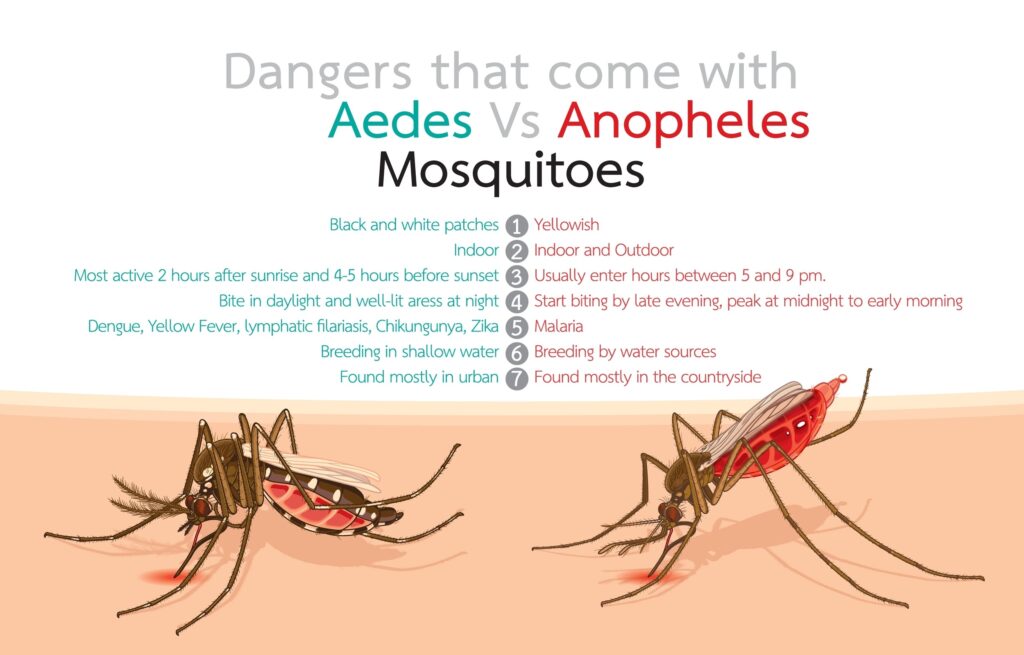
Both diseases are spread by mosquitoes, but they aren’t the same type of mosquito. Think of them as two different delivery drivers with very different schedules.
- Malaria: Carried by the Anopheles mosquito. These guys are “night owls.” They are most active between dusk and dawn. If you got bit while sleeping or sitting outside at night, malaria is a likely suspect.
- Dengue: Carried by the Aedes mosquito. These are “daylight hunters.” They are most active during the day, especially early morning and late afternoon. They also love hanging out indoors in cool, dark corners.
2. The Symptoms: How Do You Feel?
While both will make you want to stay in bed all day, the way they make you feel miserable is slightly different.
Malaria: The “Waves” of Illness
Malaria often moves in cycles. You might feel okay for a few hours, then suddenly get hit by a “paroxysm”:
- The Cold Stage: Intense shivering and teeth-chattering chills.
- The Hot Stage: A spiking fever, headaches, and vomiting.
- The Sweating Stage: Your temperature drops, and you drench your clothes in sweat.
Dengue: The “Breakbone” Fever
Dengue is famous for making your bones feel like they are literally breaking. It’s a sharp, deep pain.
- Pain behind the eyes: This is a classic Dengue sign. If it hurts to move your eyes left or right, take note.
- The Rash: Dengue often brings a flat, red rash that shows up a few days after the fever starts.
- Joint and Muscle Pain: Unlike the general “body ache” of malaria, Dengue pain is often concentrated in the joints.
3. At-a-Glance Comparison
| Feature | Malaria | Dengue Fever |
| Cause | A parasite (Plasmodium) | A virus (Dengue virus) |
| Incubation | Usually 10–15 days after bite | Usually 4–10 days after bite |
| Fever Pattern | Comes in cycles (every 48-72 hours) | Continuous high fever (can last 2-7 days) |
| Pain Location | General muscle aches and headache | Severe joint pain & pain behind the eyes |
| Skin Signs | Rare (sometimes yellowing/jaundice) | Red skin rash is very common |
4. When Is It Time to See a Doctor?
You should never “wait and see” with these two, especially since malaria can become life-threatening very quickly if it hits your brain or kidneys. However, there are specific Red Flags that mean you need an emergency room immediately:
For Malaria:
- You feel confused, disoriented, or extremely drowsy.
- You notice your skin or the whites of your eyes turning yellow (jaundice).
- Your urine is very dark (like tea or cola).
- You are having trouble breathing.
For Dengue (The Warning Signs of “Severe Dengue”):
- Severe stomach pain or constant vomiting.
- Bleeding from the gums or nose.
- Persistent vomiting (more than 3 times in 24 hours).
- Feeling extremely tired, restless, or irritable.
The Golden Rule
If you have a high fever and live in (or recently visited) a region where these are common, get a blood test. A simple RDT (Rapid Diagnostic Test) for malaria or a NS1 antigen test for Dengue can give you an answer in minutes.
Because Malaria is treated with anti-parasitic drugs (like ACTs) and Dengue is a virus (meaning you mostly treat the symptoms with fluids and rest), getting the right diagnosis determines your entire recovery path.
A quick safety tip: If you suspect Dengue, avoid taking Ibuprofen or Aspirin for the pain, as these can increase the risk of bleeding. Stick to Paracetamol (Acetaminophen) until a doctor tells you otherwise.
Are you currently looking for ways to mosquito-proof your home or dorm, or are you more interested in the specific medical tests used to confirm these?
I honestly didn’t know that dark urine or yellowing eyes were such urgent red flags for malaria. We usually just wait and see’for a few days, but this shows why that’s so risky. Thanks for breaking down the difference between the mosquitoes too I will be watching out for those black and white patches now.
The ‘Golden Rule’ is the most important part here: If the fever is high, just get the blood test! No need to play guessing games with your health. Very timely post, especially with the way mosquitoes are moving these days.”